
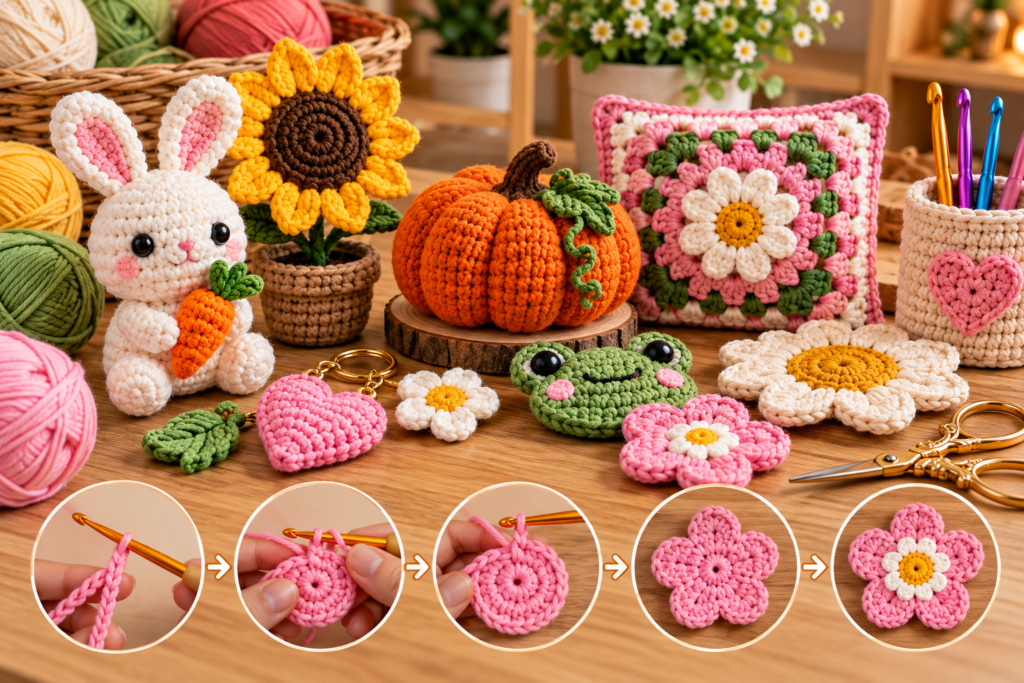
Starting crochet can feel confusing because there are so many yarns, hook sizes, stitches, and pattern abbreviations. The good news is that you do not need to learn everything at once. Your first goal is simply to become comfortable holding the yarn and hook, making a few basic stitches, and finishing one small project.
What You Need to Start Crocheting
For a first project, keep your materials simple. Choose a smooth, medium-weight yarn in a light or medium color so you can clearly see each stitch. Very fuzzy, very dark, or highly textured yarn can make it harder to see where your hook should go.
- Medium-weight yarn: easy to handle and easy to see.
- A comfortable crochet hook: use the size recommended on the yarn label as a starting point.
- Scissors: for trimming yarn ends.
- A yarn needle: for weaving in the finishing tails.
- Stitch markers: optional, but helpful for marking the first or last stitch of a row.
Learn These Basic Crochet Skills First
You do not need dozens of stitches to begin. A small group of core techniques will let you make many beginner projects.
1. Make a Slip Knot
The slip knot places the first adjustable loop on your hook. It should be snug enough to stay on the hook but loose enough to slide without resistance.
2. Crochet a Foundation Chain
The chain is the starting row for many projects. Practice making a short chain with loops that are similar in size. If the chain becomes very tight, relax your grip and let the hook do more of the work.
3. Practice Single Crochet
Single crochet creates a firm fabric and is one of the easiest stitches for learning where stitches begin and end. It is also useful for small accessories, amigurumi, washcloths, and home projects.
4. Practice Double Crochet
Double crochet is taller and works up faster. Learning both single and double crochet helps you understand how stitch height changes the look and drape of the fabric.
How to Keep Your Edges Straight
One of the most common beginner problems is accidentally adding or losing stitches. Count the stitches in every row until you become more comfortable. A stitch marker at the first and last stitch can also make the row boundaries easier to recognize.
If the piece keeps getting narrower, you may be skipping the final stitch. If it keeps getting wider, you may be working more than once into the same edge stitch.
Do Not Worry About Perfect Tension
Tension is simply how tightly or loosely you hold and work the yarn. Most beginners change tension as they learn. Aim for movement that feels relaxed and repeatable rather than trying to make every stitch perfect.
If your hook struggles to enter the stitches, loosen your grip. If the fabric looks unusually open and floppy, try holding the yarn a little more consistently or using the recommended hook size.
Choose a Small First Project
A successful first project should be simple enough to finish quickly. Good options include a coaster, simple square, basic headband, mug mat, or small scarf sample. Finishing something small teaches you more than starting a complicated project and abandoning it halfway through.
How to Read a Beginner Pattern
Before you start, read the entire pattern once. Look for the materials list, hook size, stitch abbreviations, starting chain, repeat instructions, and finished measurements. If a pattern includes a gauge, treat it as important when the final size matters.
Keep a note of your row number and stitch count. This simple habit prevents a lot of confusion when you stop and return to the project later.
Finishing Makes a Big Difference
When the last stitch is complete, cut the yarn with a short tail, fasten off securely, and weave the tail through several stitches on the wrong side of the fabric. Neat finishing can make even a simple beginner project look polished.
Beginner Crochet Checklist
- Use smooth yarn that is easy to see.
- Start with a small project.
- Count stitches regularly.
- Keep your grip relaxed.
- Read the full pattern before starting.
- Take short breaks if your hands become tense.
- Finish and weave in the yarn ends neatly.
What to Learn Next
Once you are comfortable with chains, single crochet, and double crochet, you can begin exploring increases, decreases, working in the round, color changes, and simple shaping. Browse our beginner crochet ideas when you are ready for your next project.
FAQ
What crochet hook size is best for beginners?
There is no single perfect size. A medium hook paired with medium-weight yarn is generally easier to handle than very small hooks and thin yarn.
Why are my crochet stitches too tight?
Beginners often grip the hook and yarn too firmly. Try relaxing your hands and allowing the loops to slide smoothly along the shaft of the hook.
How long does it take to learn crochet?
Most people can learn the basic motions fairly quickly, but consistent stitch size and pattern reading improve with regular practice. Short, frequent practice sessions are usually more useful than trying to master everything in one day.